
JAN. - Vol. 2, No. 1
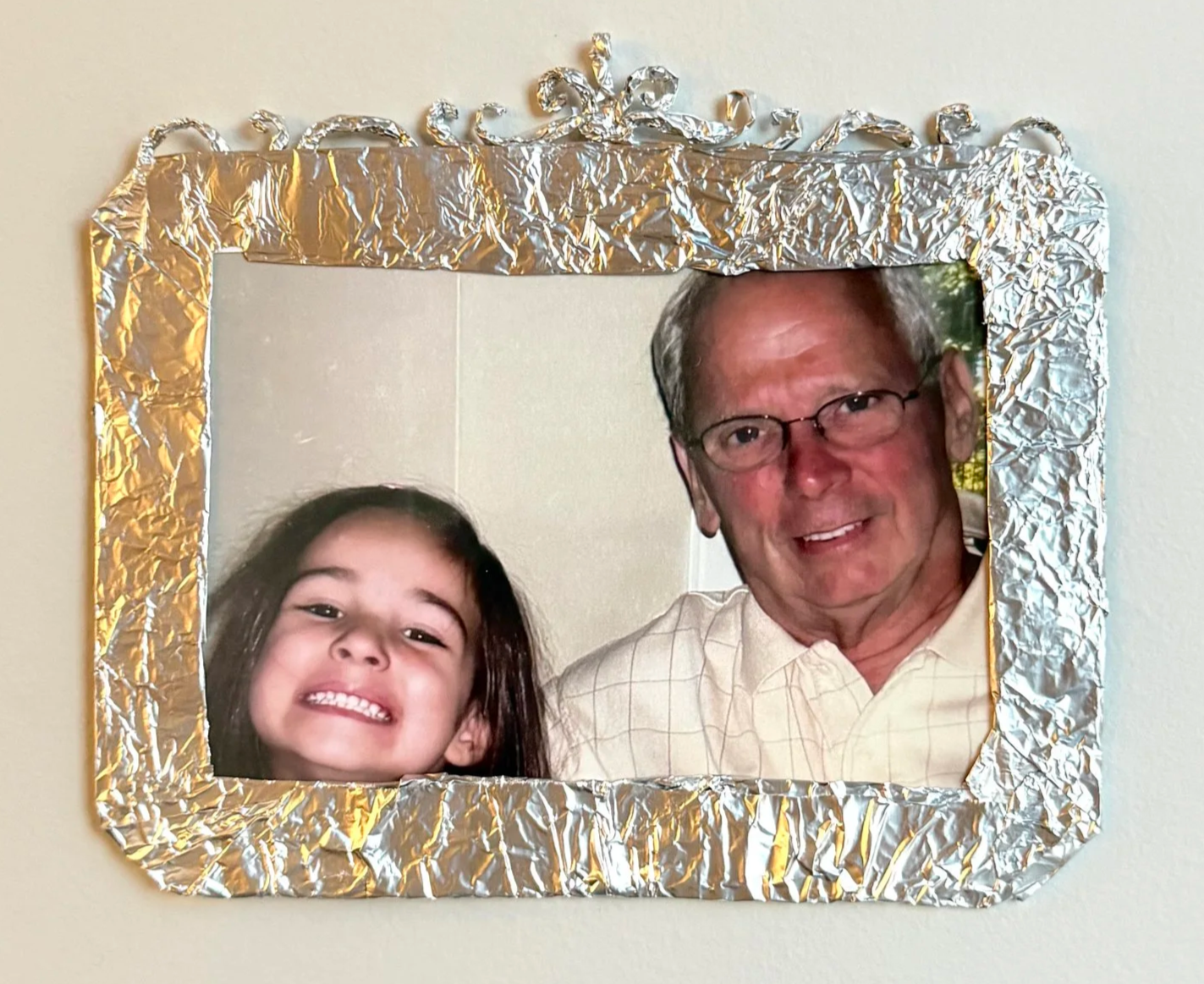
Remembering Andrews Martin
By: Ella Vick
Thoughts while listening to “Sitting on the Dock of the Bay” by Otis Redding
Every morning we spent at his house, Papa got up early with the grandkids and let our parents sleep in. We kept a routine that is ingrained in my earliest childhood memories: chase the geese out of his yard, refill the birdfeeder, and raise the American flag. In fact, I recently learned that Papa delayed driving Nana to the hospital while she was in labor to scare the geese on his property away.
After these tasks were complete, we made breakfast, and he would intermittently pause between flipping eggs to spray whipped cream into the grandkids’ mouths. Then, we would carry our breakfast outside to eat while sitting on the rocks. As the song describes, we would “watch the waves slowly roll in.” I learned so much from sitting and wasting time with him. It truly seemed like nothing would ever change; he had a firm presence and an absolute love that still does not fail to ground me back into my feet. I began to admire the scariest waves, because I knew I would always watch them roll away.
I, and many others, turned to Papa when it seemed nothing else would come our way. His undying loyalty made him the best confidante. One of my family’s favorite stories is when Papa cornered a woman at our church who had been mean to my brother - my mom swears she only let Papa out of her eyesight for a moment. He was slightly mischievous and didn’t forget anyone who wronged his family. I do smile sometimes when I think about him up in heaven, haunting anyone who harms me.
Throughout 18 years of visiting his house, everything remained mostly the same. It was a dependable and comforting escape. In a world that encourages constant futurizing and searching for “the next best thing,” I find it deeply admirable that he spent his entire life in that house. As decades passed, Papa never once grew tired of watching the same sunrises and sunsets. In fact, I can almost hear him remarking: “Isn’t it beautiful?”
I can’t remember the context of this last memory, but I assume I was proposing a plan to him and asking for his approval when he responded, “I’ll follow you anywhere, girl.” I think about my family and the handful of friends that I would follow anywhere, at any time, with no questions asked, and I feel so privileged that I was one of those people for my Papa. I am grateful to be reminded of him in my mom and aunts, and for the characteristics that I share with him. Mostly, I just feel lucky to have known him.



Thoughts while listening to “The Gambler” by Kenny Rogers
On many warm summer evenings, Papa and I would sit on plastic chairs and take turns staring out at the darkness. He would tell me stories about his life, and at the time, I didn’t realize the importance of the lessons I was learning.
Papa taught me how to be successful in working with all kinds of people, which is a valuable skill in this world. As a natural charmer, this came easily to him. He understood the importance of knowing, as the song says, “when to hold 'em and when to fold ‘em”. This ability to make judgment calls and to know when to fight carried him far. Papa was a big proponent of manners at the dinner table, which points to his greater emphasis on tact and class - “you never count your money when you’re sitting at the table.”
I love this song because the metaphor is deliberate; life is a gamble. I have been served the sobering reminder that we have limited days on this Earth. Suddenly, my everyday problems matter a lot less. Though he may no longer be with me in flesh, Papa has continued to put everything into perspective.
My joy has been stolen, it’s
forced me to fight. When I am better,
I hold onto it with all of my might.
to be human is to feel
companionship and knowing and pain.
what could be better than
“I’ll follow you anywhere”
Nothing.
I watch as you rest, you’re not dead yet.
at Heaven's waiting room-
I just want you to call.

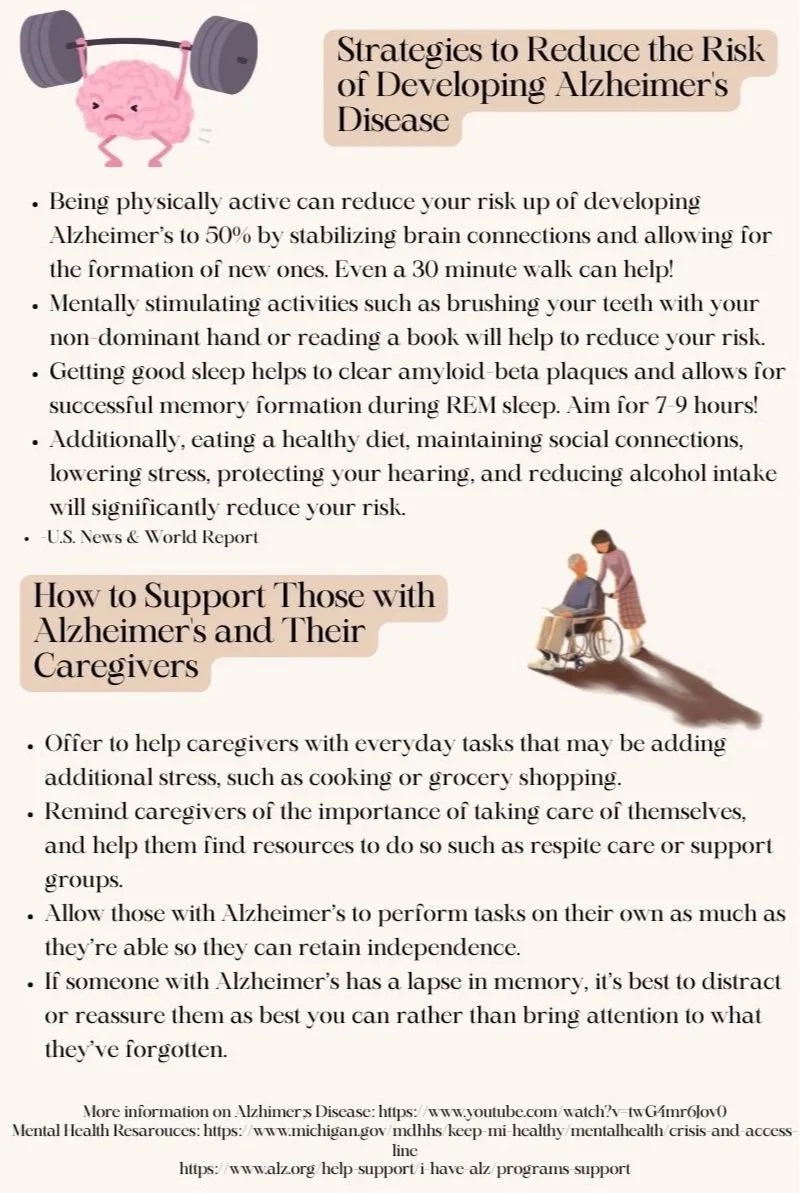
This month’s education feature explains Alzheimer’s disease in a clear, student-friendly way. It covers what happens in the brain, how memory and behavior change over time, and what research says about lowering risk. We also offer practical tips for students to support people living with Alzheimer’s and their caregivers, focusing on empathy, independence, and simple actions that can help.
January Education Edit:

January Service Edit: Highlighting Michigan Medicine’s Silver Club
By: Kate Ripple
What are the Silver Club Memory Programs?
The University of Michigan’s Turner Senior Resource Center established the Silver Club Memory Programs in 1998 to meet the needs of both adults with memory loss and their caregivers. Programs for individuals with mild memory loss include Mind Works, in which participants discuss coping strategies, share their stories, and work together to exercise their minds; as well as the Elderberry Club, an all-women’s group focused on finding community, supporting each other, and expressing themselves through art. Individuals with moderate memory loss can attend the Silver Club Day Enrichment Program, which engages them in enriching activities such as crafts, group discussions, exercise, and gardening.
What does Silver Club provide?
Community: Memory loss can be an isolating experience for many older adults, especially those who have been recently diagnosed. Silver Club’s mild memory loss programs provide a community for these adults; discussing their experiences with others who face similar difficulties reminds them that they’re not alone. The Day Enrichment Program also encourages social activities, which otherwise could be difficult for older adults with memory loss to find.
Stimulation: The Silver Club Memory Programs encourage mental stimulation for members with all levels of memory loss. Mind Works participants practice mental exercises, coping strategies, and memory techniques; Elderberry Club members stimulate their minds by creating art together; and the Silver Club Day Enrichment Program provides a variety of enriching activities that allow participants to remain social, keep their minds and motor skills active, and find purpose in everyday life.
Respite: Caring for a loved one with Alzheimer’s is a difficult responsibility. As much of their time is spent caretaking, caregivers often have difficulty finding time to care for themselves and complete everyday tasks, which can lead to stress, exhaustion, and depression. Silver Club offers respite care for those with moderate memory loss, giving their caregivers a chance to rest and care for their own physical, mental, and emotional health.
How can you get involved?
Donate: Silver Club Memory Programs accepts donations through Michigan Giving. Their website can be found here (https://giving.umich.edu/um/w/silver-club-memory-programs-367384 )
Volunteer: Volunteers for Silver Club Memory Programs typically assist with Day Enrichment Program activities and engage with members. More information about volunteering can be found on the University of Michigan Geriatric Center’s website (https://medresearch.umich.edu/labs-departments/centers/geriatrics/education-outreach/volunteer-opportunities).
Refer: If a loved one could benefit from Silver Club Memory Programs, meeting times for Mild Memory Loss Programs, as well as resources for joining the Silver Club Day Enrichment Program, can be found on their website (https://www.michiganmedicine.org/community/community-health-services/silver-club-memory-programs).