OCT. - Vol. 3, No. 1
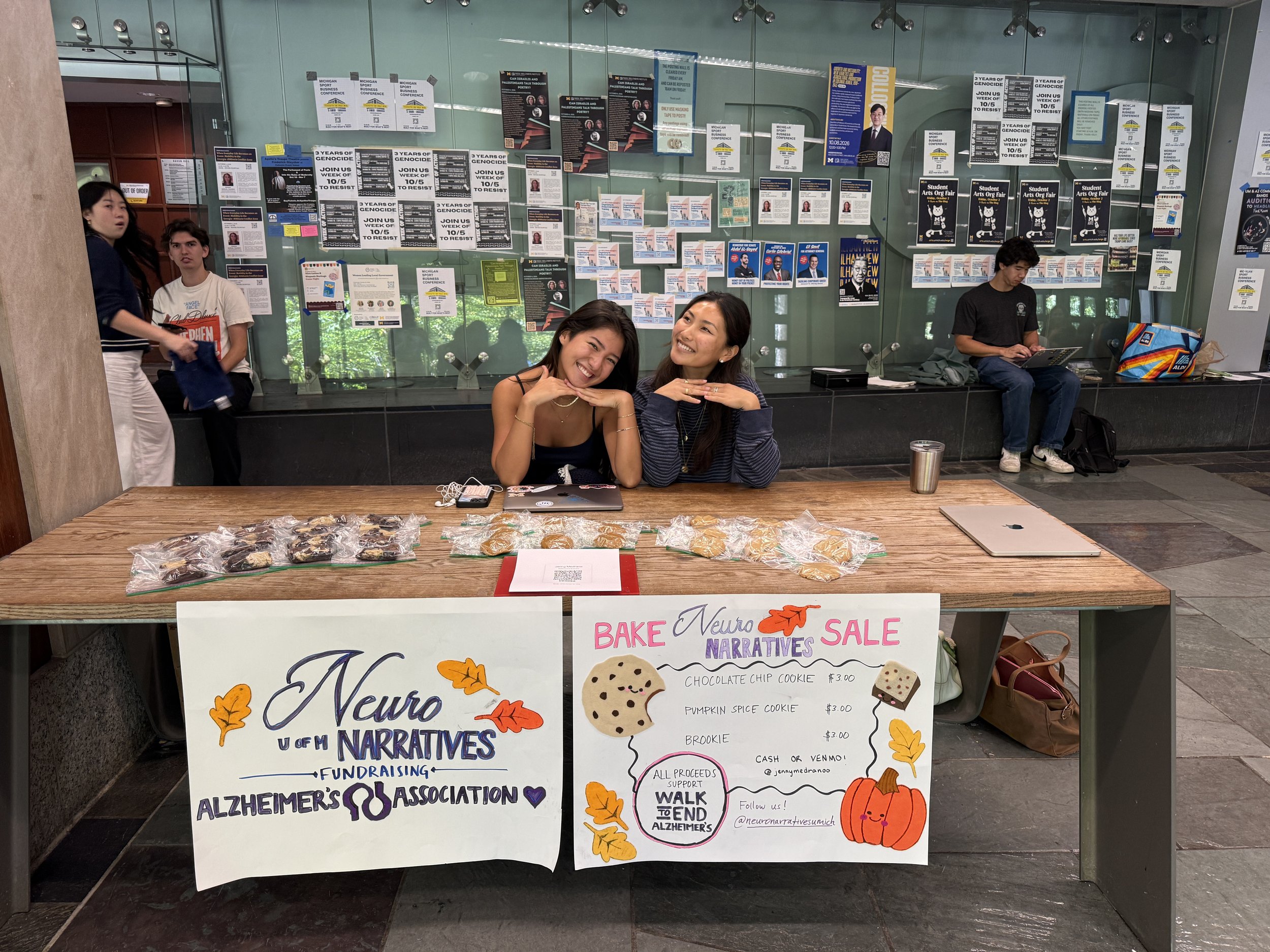
NeuroNarratives Bake Sale x Walk To End Alzheimer’s
This month, NeuroNarratives efforts were centered around the Walk to End Alzheimer’s and supporting our fundraising efforts as a club. While our Education, Art, and Service tracks are always fluid and often overlap, October gave members the opportunity to focus especially on service while also putting their creativity to use.
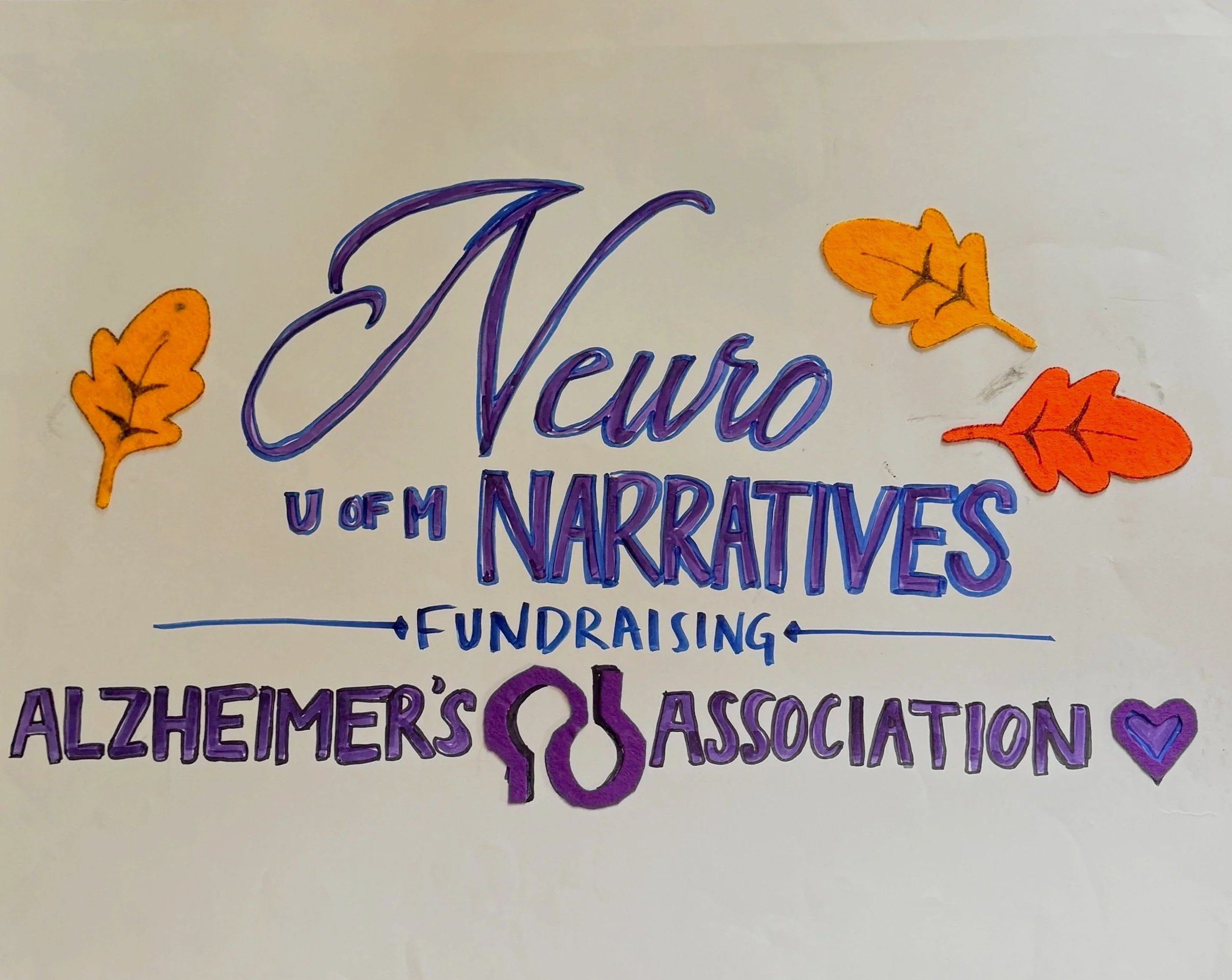
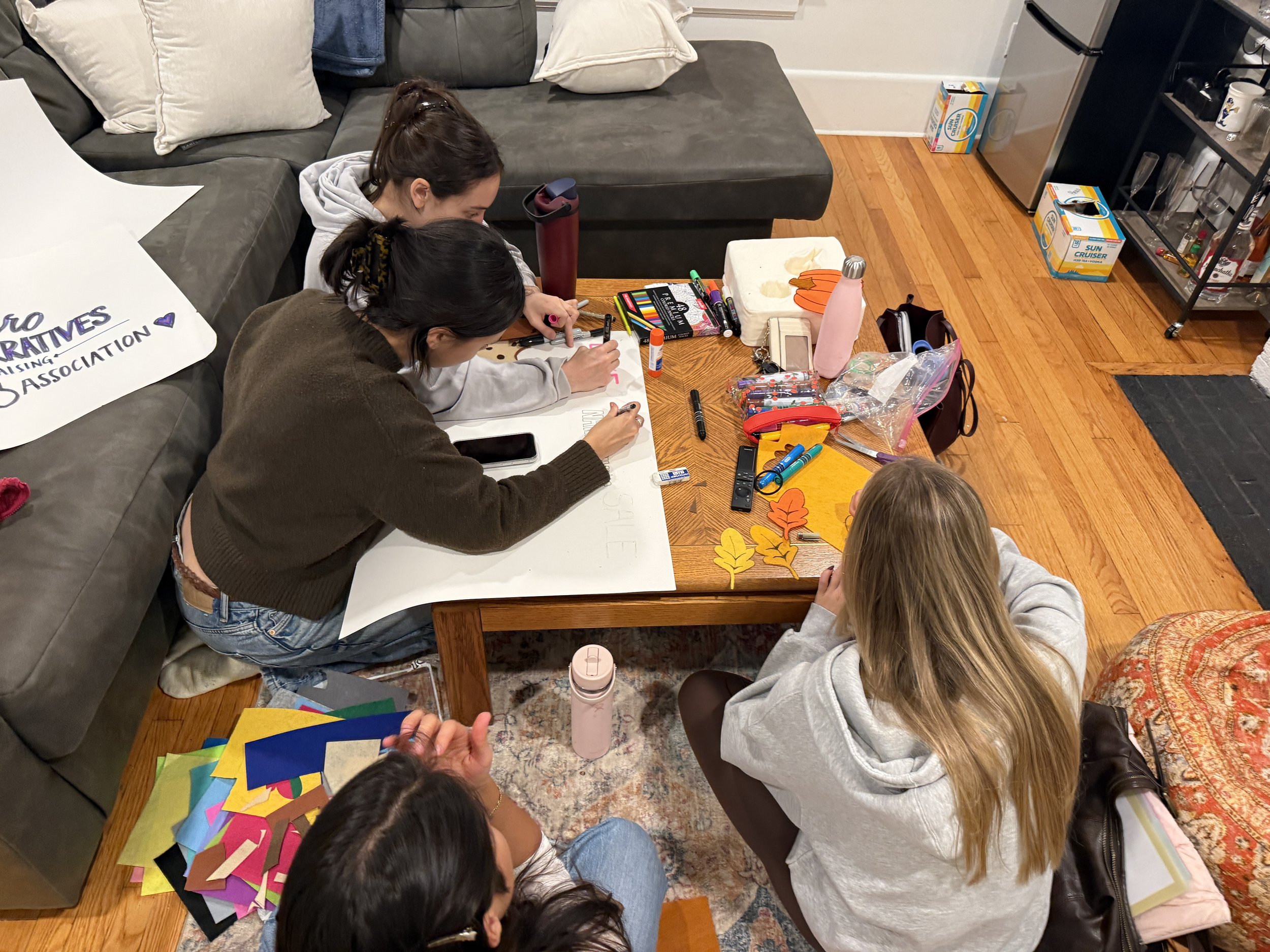
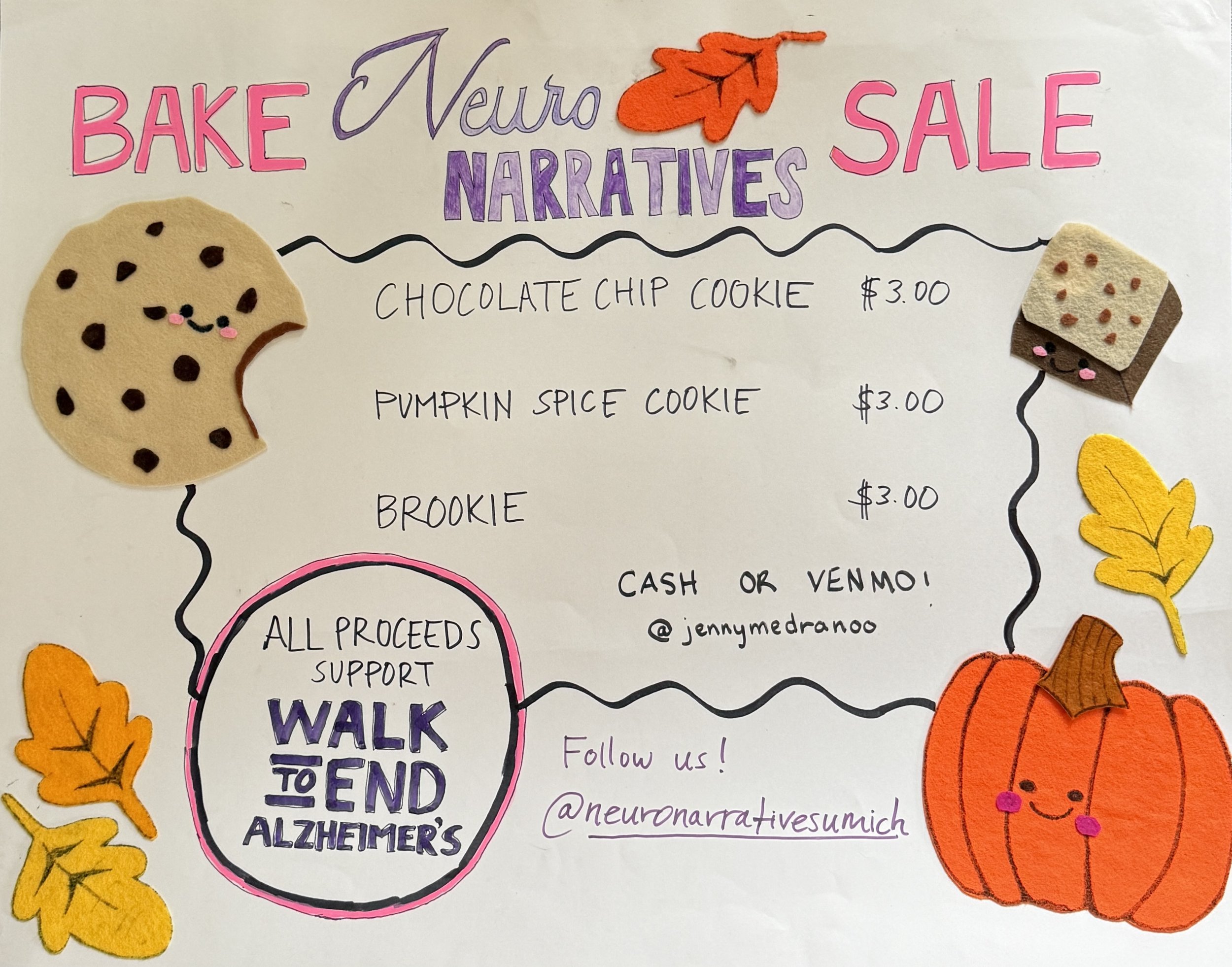
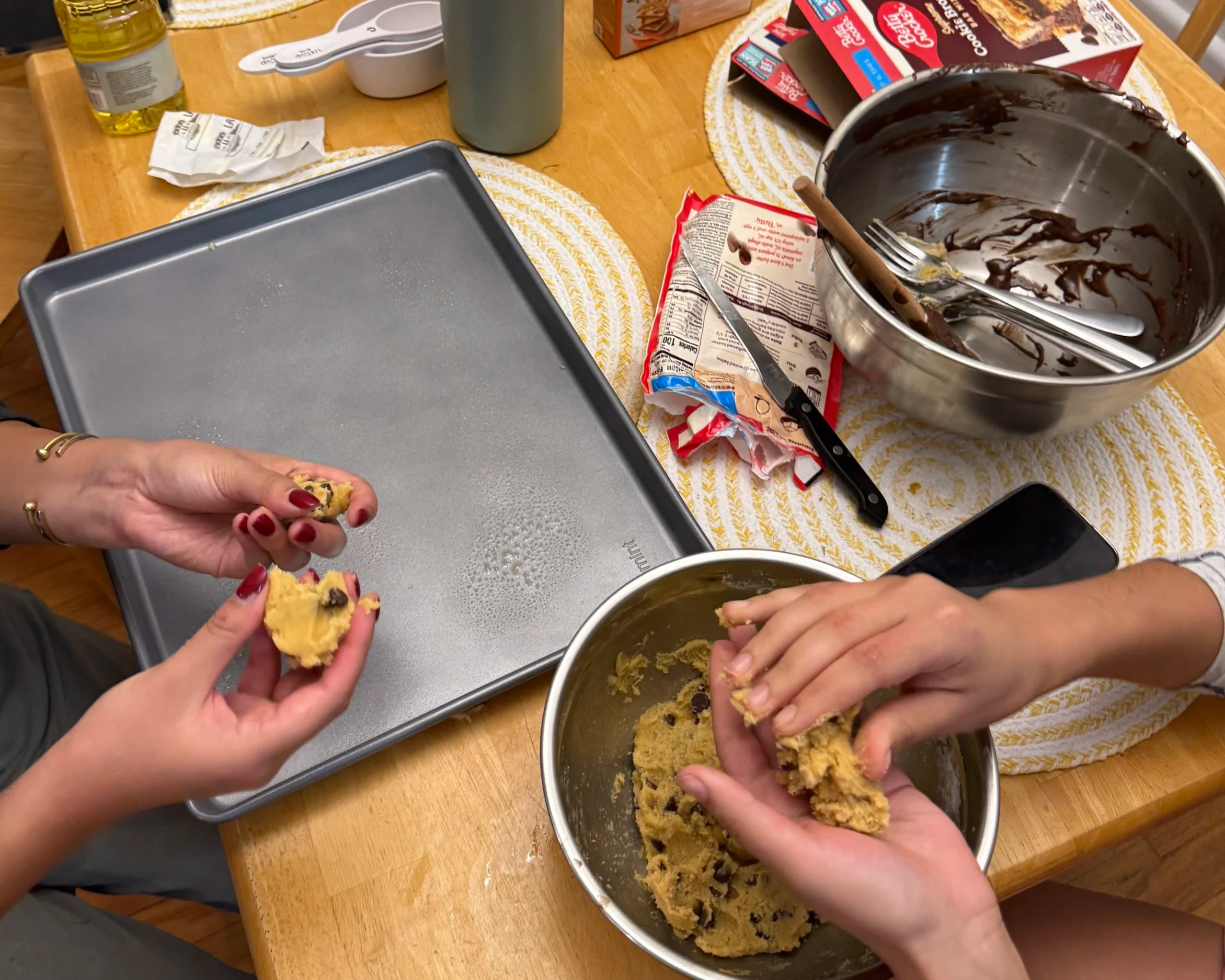
NeuroNarratives hosted a bake sale to help raise money for Walk To End Alzheimer's, with all proceeds supporting Alzheimer’s care programs, educational resources, support services, and research. Members baked treats and came together for a fun bonding night to create posters, menus, and advertise the sale. Every dollar raised went to Alzheimer’s care programs, educational resources, support services, and research.
Our Art team used felt, poster board, markers, and other visuals to help make the table eye-catching and inviting. Beyond fundraising, the night served as quality time for our members to collaborate creatively and have fun, all while supporting NeuroNarratives’ mission.
THE ALZHEIMER’S ASSOCIATION
NEURONARRATIVES EDUCATION - https://www.alz.org/
The Alzheimer’s Association is a nonprofit volunteer health organization dedicated to improving the lives of people impacted by Alzheimer’s Disease through advancing scientific research, educating the public, supporting those affected, and advocating for improved care and funding for research. The Alzheimer’s Association aims to create a world free from Alzheimer’s Disease.

IMPACT
In 2024, the Alzheimer's Association provided more than 10 million support and care interactions. These interactions were facilitated through systems such as the 24/7 helpline, educational programs, support groups, and more.
The Alzheimer's Association has invested more than $450 million in research projects spanning 59 countries. These projects explore potential treatments, support prevention and diagnostic strategies, and improve care.
The Alzheimer's Association has helped to increase U.S. funding for Alzheimer's research to $9.3 billion annually, a sevenfold increase from federal funding 10 years ago.
The Alzheimer's Association provides many practical, free resources.
The 24/7 online Alzheimer's Association Helpline is available at all times, every day of the year, to provide confidential support, relevant information, help finding local resources, and guidance for caregivers. The phone number is 800-272-3900.
The Alzheimer's Association offers free in-person and virtual support groups to provide support for both people living with dementia and their caregivers. These groups offer support, advice, and community for those going through difficult situations related to Alzheimer’s Disease.
In addition, the Alzheimer's Association provides free online interactive tools to offer support, education, and resources. These include: online forums to discuss the realities of Alzheimer's Disease with others in the community, E-News sites, educational programs, online webinars, and community finder resources.
RESOURCES
INITIATIVES
The Alzheimer’s Association's biggest initiative is the annual Walk to End Alzheimer’s fundraiser. This walk is the largest fundraiser for Alzheimer’s care and research in the world. Walk to End allows people to gather together in community to fundraise, display research projects, give inspirational speeches, and remind the world of the importance of ending Alzheimer’s Disease.
The Alzheimer’s Association also hosts an annual Ride to End Alzheimer’s. After raising a designated amount of money, participants of all skill levels can ride their bikes. Rides are offered at various locations in many communities. In addition, virtual and self-directed options are available for those who want to bike individually. Funds go towards research, support, and early detection for Alzheimer’s.
Based on the most recent issue of the Alzheimer’s Association, “Alzheimer's Association Launches National Initiative to Bring Advances in Brain Health and Dementia Care into Everyday Clinical Care”, the launch of the “Brain Health and Quality Care Initiative” (BHQCI) is notable and meant to bring quality dementia care into regular clinical practice. According to the issue, the initiative aims to “create a national framework to help health care organizations implement evidence-based approaches to brain health and dementia care across clinical settings.” In practical settings, this will look like educating professionals to focus on “risk reduction, cognitive assessment and diagnosis, referrals, and connections to care and support services.” This initiative aims to create clear, concrete guidelines for providers to follow rather than encouraging clinicians to think about these practices, which can come off as vague and unreinforced.
Significant strides have been made with regard to improving testing for these conditions, with earlier detection allowing for earlier interventions and care plans, but there are still gaps in care. For example, cognitive assessment is still not seamlessly integrated into standard care. The initiative aims to bridge these gaps by implementing an objective framework and nationally recognizing organizations that implement BHQCI in their dementia care.
Eisai and Eli Lilly and Company are largely responsible for this initiative, as they are its founding partners and played a role in developing and implementing it across health systems. As BHQCI expands, more organizations are expected to support it.
While this initiative is still in its early stages of implementation, it will ideally grow over time and reach more organizations, taking a major step towards standardizing dementia care in healthcare systems and beginning treatment as early as possible.
RECENT NEWS
ALZHEIMER’S & DEMENTIA CAREGIVER SUPPORT
The Alzheimer’s Association has an extensive section of its website dedicated to resources for caregivers and supporters of people with Alzheimer’s. It covers every aspect of the caregiving process, from daily routines to legal matters and cost planning. There is also an emphasis throughout on recognizing the strength and hard work of caregivers,
The first portion of the section goes into detail about wandering, which is a common symptom of Alzheimer's disease where a person living with the disease will leave their home or place of care and become lost or confused about their location. The page outlines signs of future wandering, ways to discourage wandering behaviors, and physical steps to prepare one’s home to prevent wandering. The Association also lays out a detailed guide of how a caregiver’s role changes as the disease progresses, and what a caregiver needs to know to prepare for the stages of dementia. The Early Caregiving section focuses on support that maximizes independence and strategies that make a patient’s life as autonomous as possible. The section also explains how caregivers may be emotionally affected by these changes and what to expect. The Later Stage sections relate more to physical caregiving and improving quality of life.
The Association also offers a free 24/7 Helpline (800.272.3900) to offer support for caregivers, families, and people with Alzheimer's and dementia. At any time of day, a caregiver can connect with a real person who can answer questions, provide local resources, and offer crucial emotional support.
Caregiving can be incredibly isolating and difficult, and fortunately, the Association provides resources for caregivers to stay connected. The website offers easy ways to join caregiving support groups, connect with an online community, or find a local Alzheimer's Association chapter to get involved.
According to the National Library of Medicine, up to 50% to 60% of Alzheimer's and dementia caregivers report experiencing significant stress, psychological distress, or clinical depression. Chronic stress can cause sleep deprivation and emotional strain that can weaken a caregiver's immune system, increase stress hormones, and raise the risk of heart disease, high blood pressure, and exhaustion. All of these symptoms both worsen a caregiver’s quality of life and harm the care given to those suffering from Alzheimer’s and dementia. This is why the resources the Alzheimer’s Association provides are so important and impactful. The Alzheimer's Association has done an excellent job of providing support and resources for caregivers.
CURRENT RESEARCH & DEVELOPMENTS
Apart from the Alzheimer’s Association’s dedication to organizing community-based activities, it has also been a robust funder of various global research initiatives. The branch has primarily led this through the Part the Cloud Initiative, founded in 2012 by Michaela Hoag. After losing both of her parents to Alzheimer’s, Hoag was inspired to accelerate the timeline for which potential treatments could be explored, as noted by the branch’s dedication to rewarding “high-risk, high-reward investigational therapies” that dare to push the boundaries of current research.
Ongoing investigations span combination therapies, AI-powered drug discovery and development, and even repurposed diuretics. This reflects the idea that for a condition as broad as Alzheimer’s, treatments must be equally innovative and varied. Thus far, Part the Cloud has funded 88 clinical trials globally, investing 7 million dollars in these research efforts. Most recently, the initiative launched the Challenge to Fast-Track Alzheimer’s Breakthroughs, aiming to raise $ 30 million for novel research.
The challenge itself perfectly encapsulates the goal of Part the Cloud and the Alzheimer’s Association as a whole. The initiative helps accelerate discovery and provides funding to researchers who might otherwise struggle to get it, paving the way for revolutionary advancements in the field.
HOW TO GET INVOLVED
Participate in your local Walk or Ride to End. These events take place year-round but often occur in the fall, from August through November. They are often located in local parks, downtown areas, and other venues. For more information about how to participate: 2026 Walk to End Alzheimer's | Alzheimer's Association |
Get involved with the Alzheimer’s Association by volunteering, fundraising, donating to the cause, or joining a live webinar. See this page to explore other options to get involved: Get Involved | Alzheimer's Association
Contact policymakers and advocate for change. Contact elected officials, join in advocacy programs, and learn about current policies: Advocate | Alzheimer's Association
Spread awareness to support research and caregivers. Share reliable information, talk about brain health, and provide resources available on the Alzheimer’s Association page to those affected and their caregivers: Alzheimer's Association | Alzheimer's Disease & Dementia Help
What is Walk To End Alzheimer’s?
At Walk to End 2026…
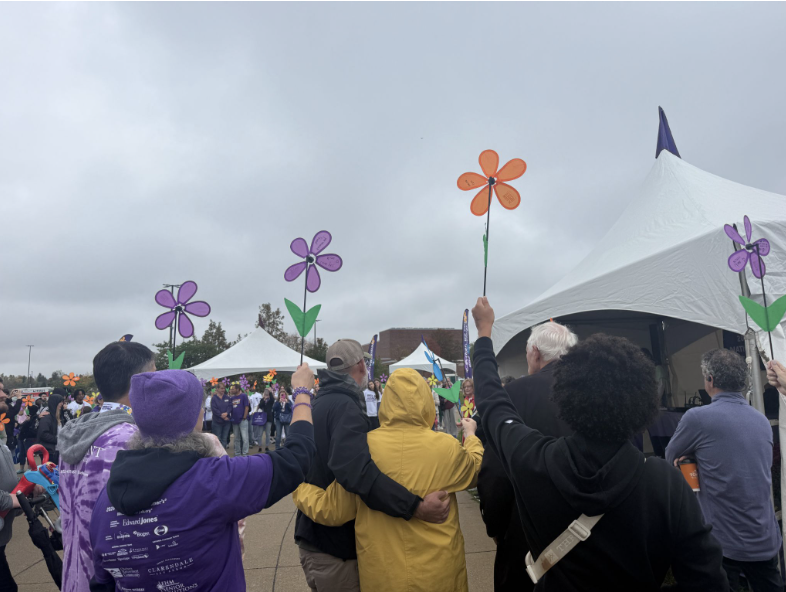
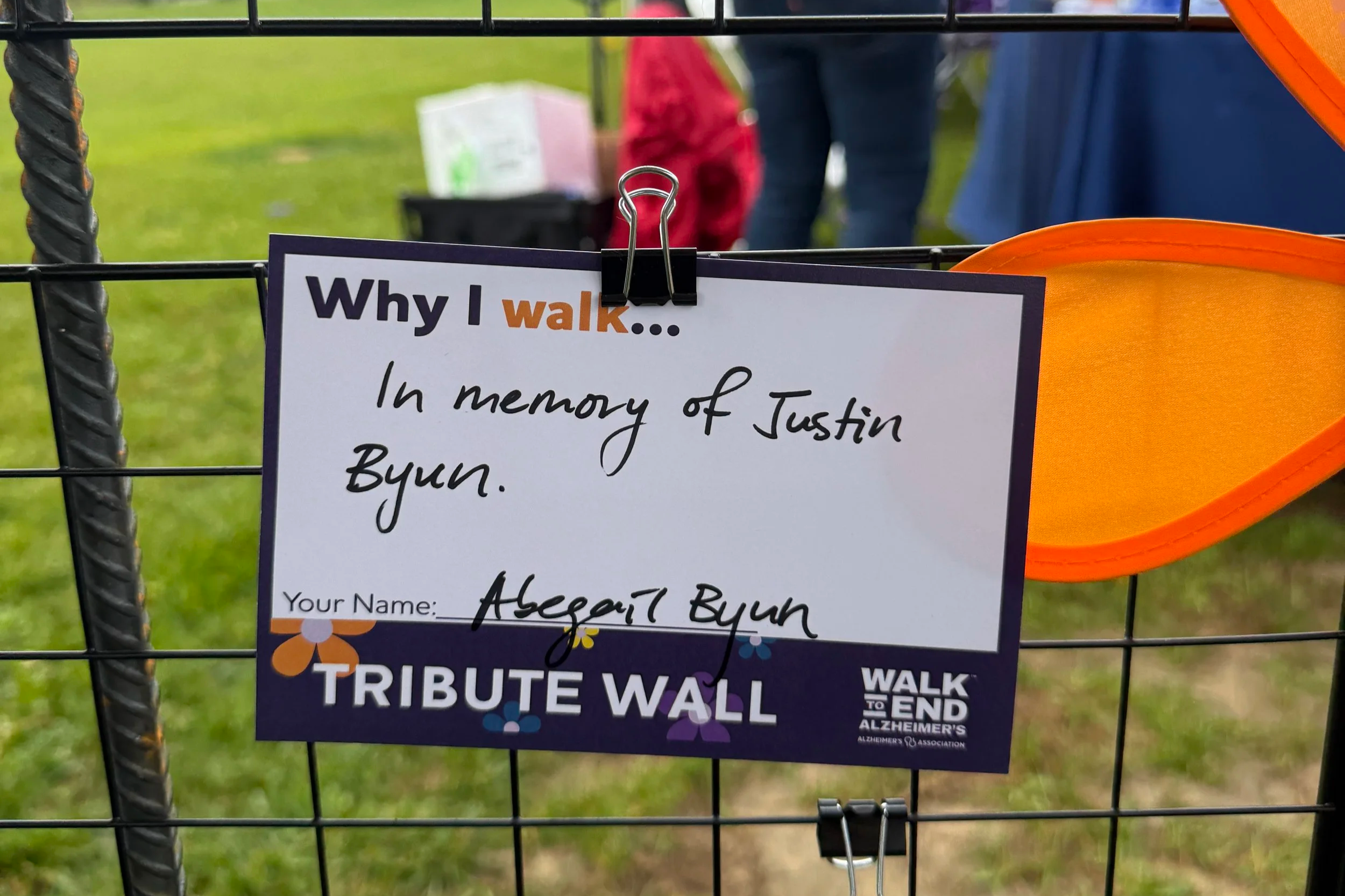
Walk to End is the world’s largest fundraiser for Alzheimer's care, support, and research. In communities across the country, participants raise money individually or with a team and then come together for a walk to show their support and raise awareness. One of the most memorable parts of the event is the Promise Garden, during which each participant carries a flower that represents their connection to the cause. Blue flowers are for someone living with Alzheimer's or another form of dementia, purple flowers represent individuals who have lost someone to Alzheimer’s, yellow flowers are for individuals currently supporting or caring for someone living with Alzheimer’s, and orange flowers are for individuals supporting the cause and the Alzheimer’s Association’s vision of a world without Alzheimer’s and other dementias.
Our future impact?
We plan to continue our involvement with the Alzheimer’s Association and spread awareness through art, education, and service. Each month's newsletter encapsulates a new theme within the Alzheimer's community, and we hope to keep discovering new and creative ways to both educate our local community about this disease and preserve the stories of those affected by Alzheimer’s. Our team looks forward to next year’s Walk to End, and until then, we will continue to publish monthly newsletters and host local service events.
How did we contribute this year?
This year, NeuroNarratives was able to raise $4,272 for Walk to End, earning our organization the title of Grand Elite Champion! This was our second year participating in the walk, and we raised over three times what we were able to raise last year. Prior to the event, we baked cookies and brownies for an on-campus bake sale and promoted our Team fundraising page to friends, family, and the on-campus community. All proceeds from both of these fundraisers went towards the Alzheimer’s Association. Raising money was not the only goal of these fundraisers, though; we also aimed to spread awareness about Walk to End and the search for a cure to Alzheimer’s.
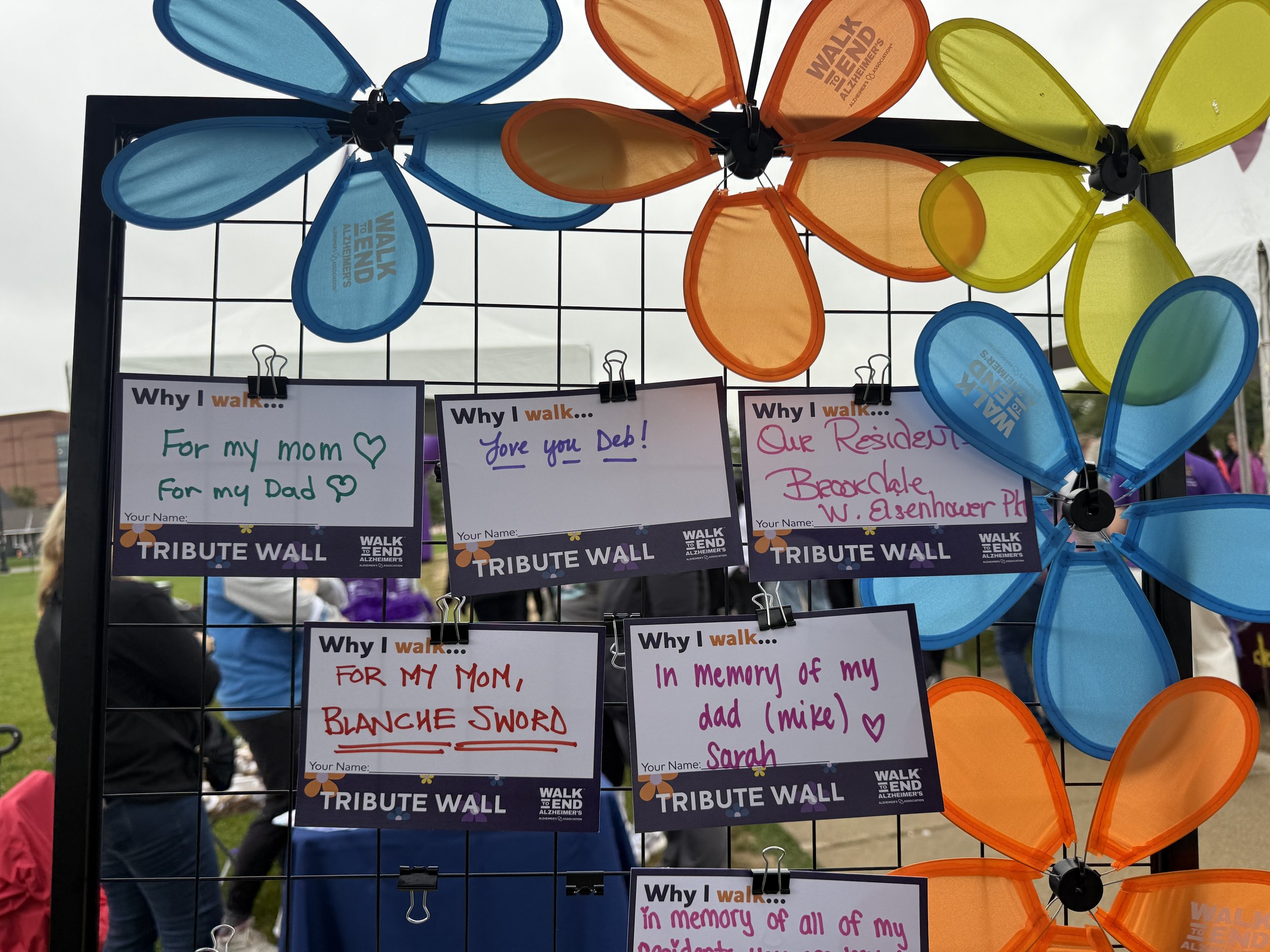
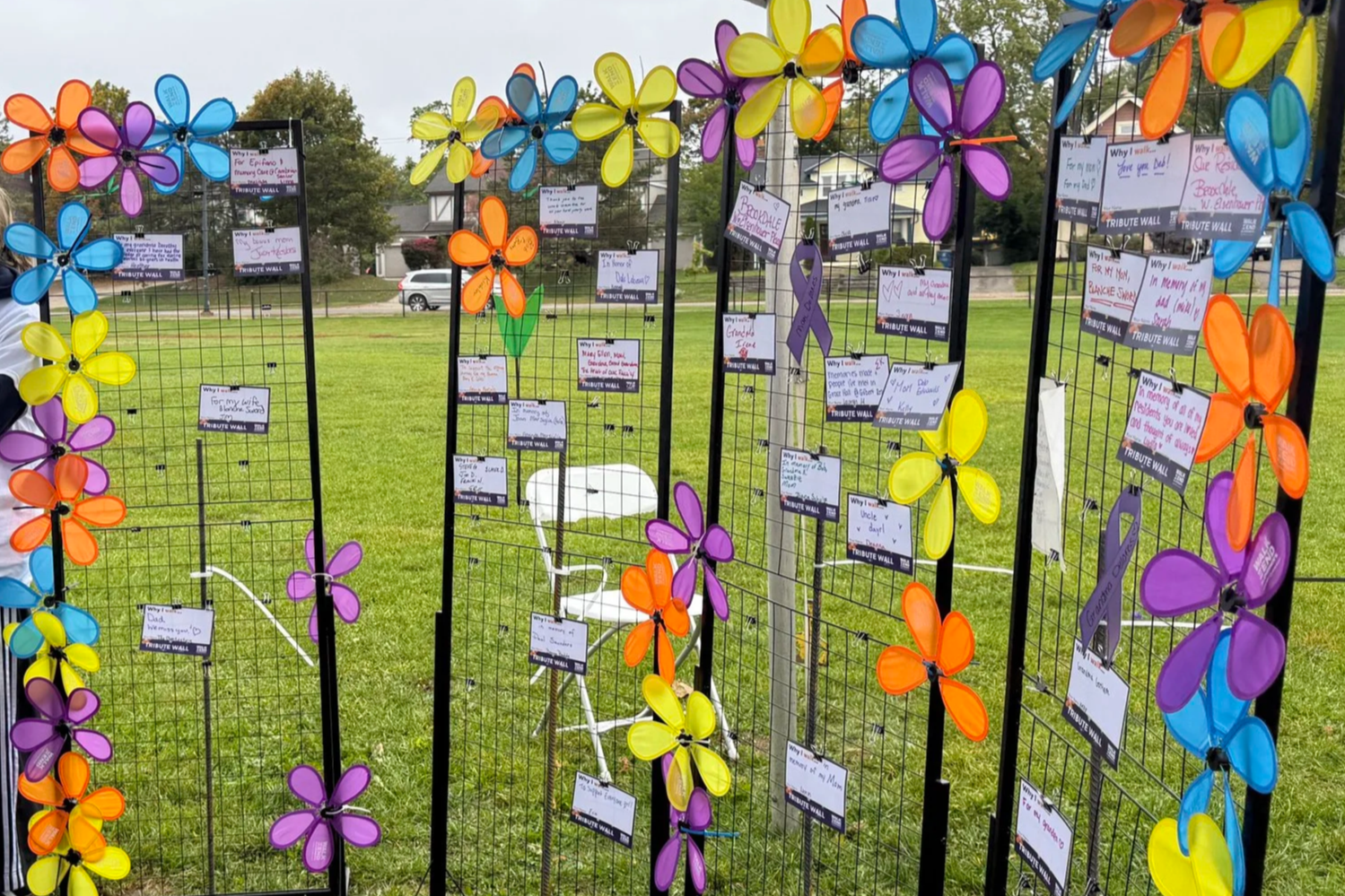
On October 25th, a group of NeuroNarratives members attended Walk to End. Our members participated in the walk, spoke with members of the community, and documented the event in order to spread further awareness through our newsletter. We’d like to extend a massive thanks to all of the members who showed up for the Alzheimer’s community by attending, as well as to the Alzheimer’s Association for hosting this event and serving people with Alzheimer’s and their caretakers!
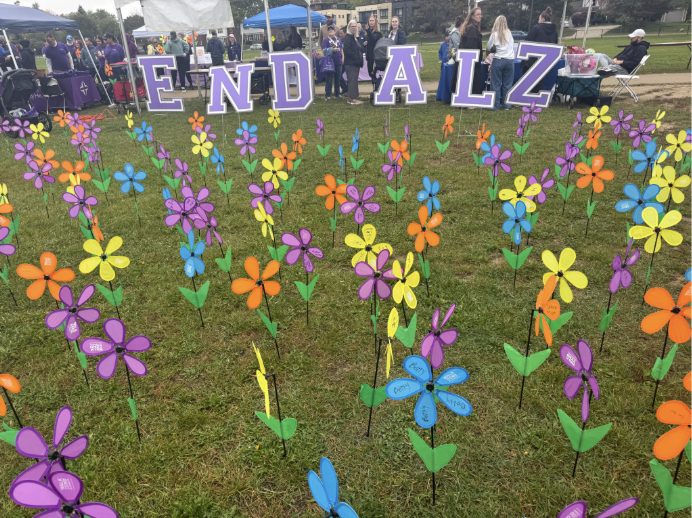
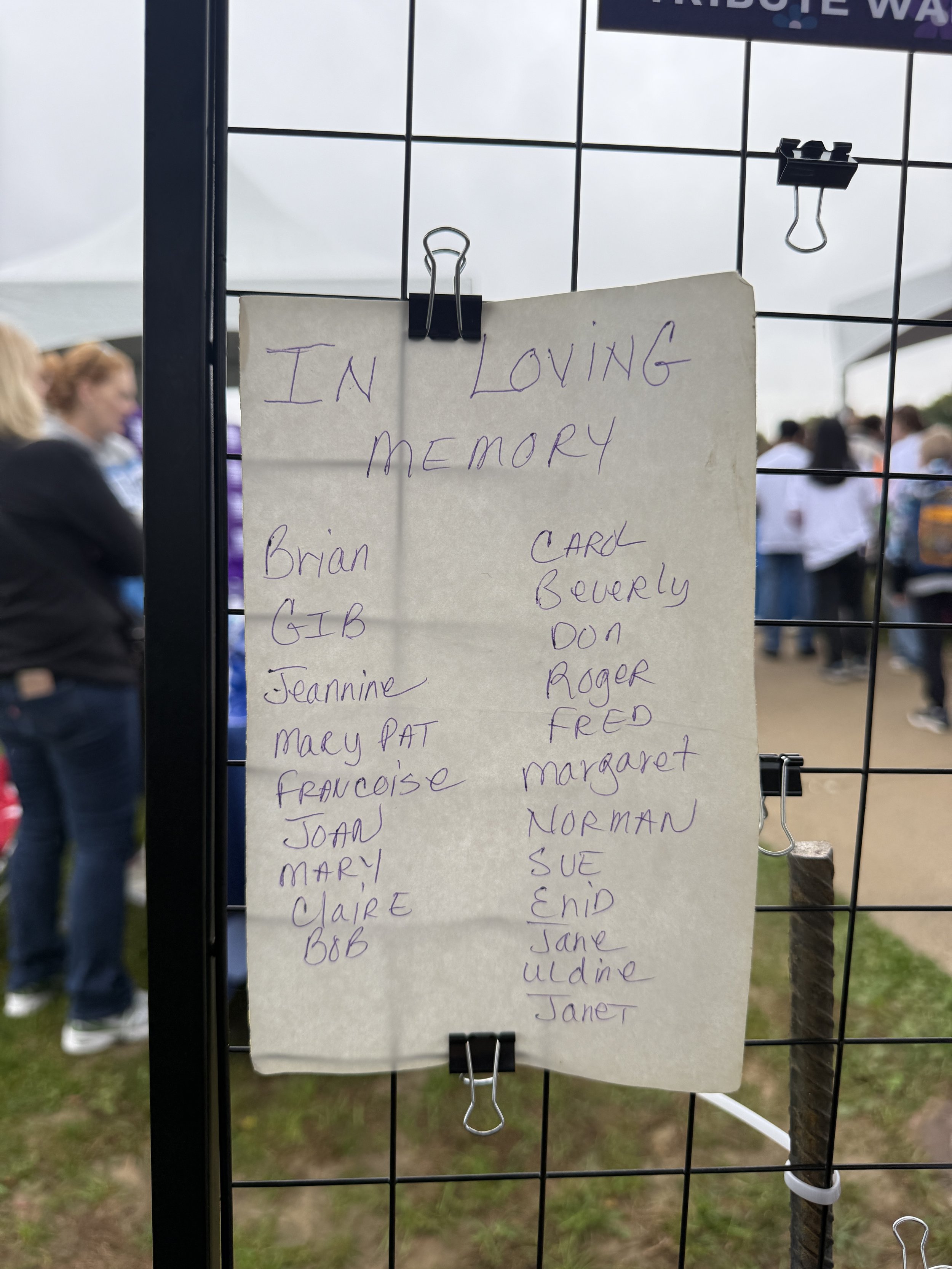
Participants are encouraged to take a flower whose color corresponds to their involvement in the local Alzheimer’s community before the commencement of the Opening Ceremony. Then, after a series of local speakers, each category of flower is raised one by one, culminating in a touching display of community togetherness with all of the flowers raised together. Before this final moment, they feature a special category: the single white flower. This flower is meant to represent the first patient to be cured of Alzheimer’s. Serving as a beacon of hope within the Promise Garden, the White Flower brings light to the ultimate purpose of Walk to End, the Alzheimer’s Association, and every effort put forth by the Alzheimer’s community: to one day find a cure.